How to Prioritize Your Renovation Wish List Without Breaking the Bank
Why Renovation Order Matters More Than Your Wish List
Every renovation starts with a wish list, and then the budget shows up, and something has to give. The instinct is to chase whatever feels most exciting first: the dream kitchen, the spa bathroom, the finished basement, but in a renovation, the order you do things in counts for as much as the list itself.
Get the order wrong, and you pay for the same work twice: you finish a space, then have to reopen it later to fix something that should have come first. Get it right, and every dollar builds toward something that lasts. Before construction starts, and before you talk to a general contractor, it helps to have a system for sorting your priorities. That's what we walk through below.
The Four-Tier Renovation Framework
We've found that most renovation wish lists sort naturally into four tiers, based on urgency and consequence rather than how exciting an item feels.
Tier one is protecting the home. This covers anything structural or safety related: foundation issues, electrical hazards, plumbing leaks, roofing problems. These aren't wish list items at all. If a problem can damage the structure or create a health or safety risk, it's maintenance, not renovation, and it belongs at the very top regardless of how it competes with anything else on your list.
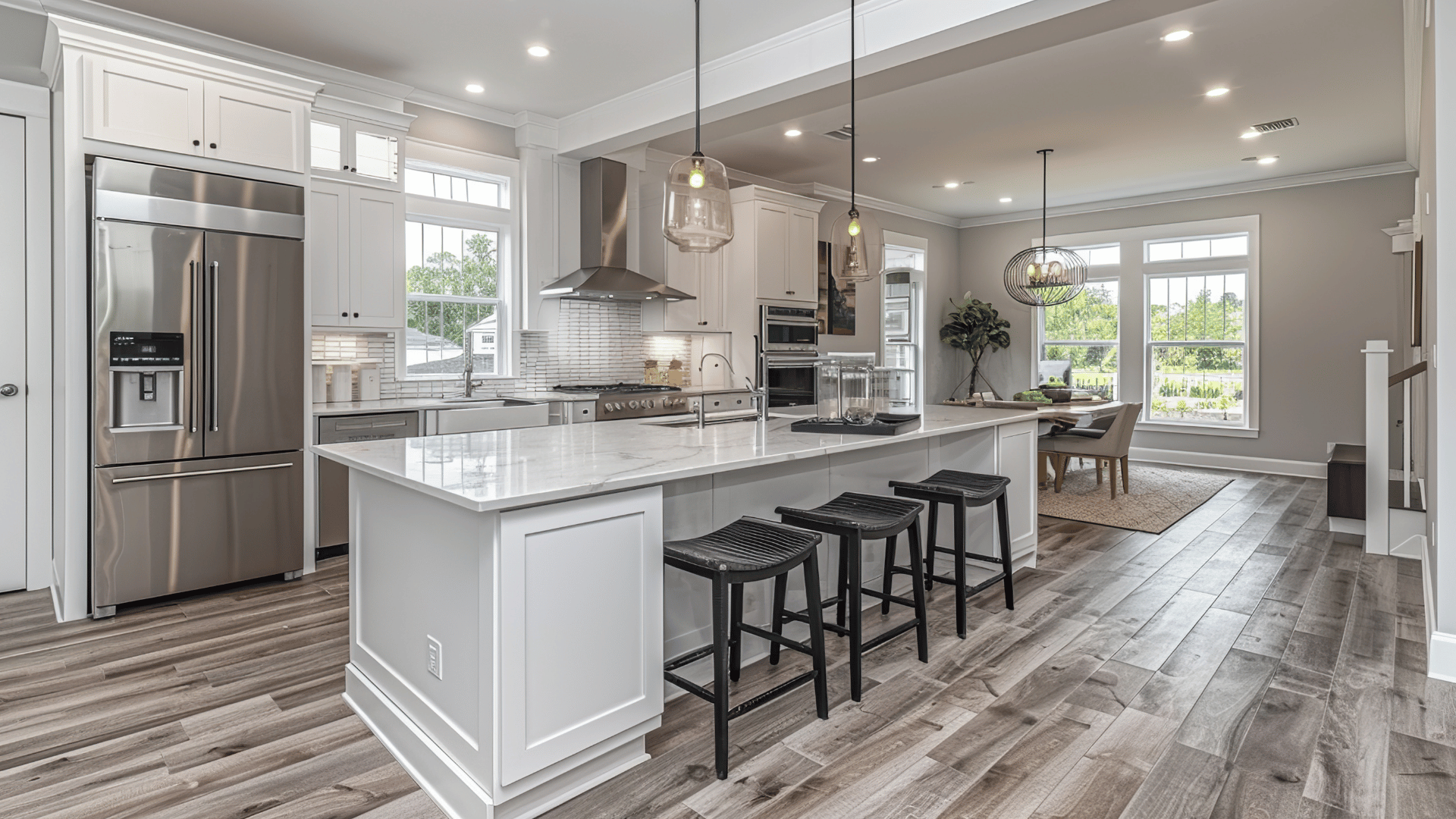
Tier two is solving functional problems. This is where your home stops working for how your family actually lives. A kitchen renovation that's overdue because the design is too cramped to cook and gather in. A layout with no dedicated workspace. A bathroom renovation needed because the room sits in the wrong place for how the household moves through the day. These issues don't threaten the structure, but they affect daily life every single time you're home.
Tier three is value and longevity. Additions, major upgrades, and design improvements that increase how well the home serves your family long term, even though nothing is urgently broken. This is where thoughtful investment pays off over years.
Tier four is cosmetic and personal. Finishes, style choices, the fun parts of a wish list that are easiest to fall in love with in photos. These matter, and they deserve real budget. They just shouldn't compete for priority against anything in tiers one through three.
Sorting your own list into these four tiers, before you ever meet with a builder, changes the entire conversation that follows. It protects against a mistake we see constantly: decisions made on the fly because nobody sat down and wrote out what mattered most before the first quote arrived. A homeowner with a sorted list can bring three different contractors the same defined scope and get three genuinely comparable answers, instead of three different guesses at a vision that was never written down.
Even if you aren’t ready to commit to everything on your wish list, the earlier your priorities are clear, the less time gets spent later untangling decisions that should have been made from the start.
How to Score and Compare Competing Projects
Sorting into tiers handles the obvious cases. When two projects seem equally deserving, the decision gets harder, and that's the moment instinct and visibility bias can take over. A general contractor worth hiring will walk you through this comparison instead of letting you guess.
We see this constantly with kitchens and bathrooms compared against something like a walk-in closet. Kitchens and bathrooms consistently deliver a strong return on investment. A walk-in closet is almost entirely personal preference. Spend two thousand dollars on a basic closet and a future buyer thinks nothing of it. Spend twenty thousand on custom cabinetry in that same closet and you likely never see it reflected in resale value. One of those is an upgrade you'll enjoy, and the other is an actual investment in the home.
The same logic applies to cost per square foot, a number that's tempting to compare because it shows up in every quick search. In practice, a 220 square foot addition can cost half a million dollars once it includes a fully finished kitchen, while a larger, simpler space costs far less per square foot. Size alone hides more than it reveals. Compare projects by what each one solves and what happens if you delay it.
Building a Budget That Protects Your Priorities
Once your tiers are set, the budget has to protect them in that same order. Tier one and tier two work should be funded first and treated as non-negotiable. Only once those are secure should tier three and tier four spending enter the conversation.
Large renovations almost always involve some unknown once construction gets underway, especially in older homes where walls haven't been opened in decades. We generally recommend setting aside a contingency of around ten percent of the project budget for exactly this reason, and often more on older properties or anything involving hidden mechanicals. On a smaller build, this might be a modest cushion. On a larger one, it can mean the difference between absorbing a surprise calmly and scrambling mid-project to cover it.
When your tier-one and tier-two priorities are protected no matter what comes up mid-renovation, a surprise stops being a crisis and becomes just another line item.
Sequencing Work to Avoid Paying Twice
The most expensive mistake in any renovation project is doing the work in the wrong order. Finishing a basement before resolving a plumbing issue. Installing new flooring before addressing what's underneath it. Once finishes are in place, undoing them to fix something structural costs far more than it would have the first time around. Permit approvals, structural work, and mechanical rough-ins always need to happen before anything gets finished and closed up.
This is also where planning pays for itself. Homeowners who map every decision, selection, and cost before construction starts consistently spend less time renegotiating mid-project and less money reworking finished spaces. The earlier your priorities are sorted and priced against real numbers instead of rough guesses, the more of your budget goes toward the home you actually want to build, not toward fixing what should have come first.
That kind of upfront sequencing, locking in scope and pricing the real project instead of a guess, is exactly what our Construction Playbook process is built to do, whether the work ahead is a major renovation or full custom home building.