Kitchen Countertops and Bathroom Tiles: What’s Best for Your House Renovation?
House Renovation Material Choices That Stand the Test of Time
When we work with homeowners on a major house renovation, the conversation often starts with layout and inspiration. Very quickly, it comes down to materials. Countertops and tile are not just finishing touches. They influence how a living space functions, how easy it is to maintain, and how you will feel about your home renovation five or ten years from now.
Most regrets we see are not about “bad taste.” They come from rushed decisions, trend-driven choices, or materials that demand more upkeep than a household can realistically manage. A successful renovation has to balance appearance, durability, renovation cost, and day-to-day use. That balance matters even more for Toronto homeowners renovating an older home, where you are investing heavily in key spaces like the kitchen, bathrooms, and sometimes the basement, and expecting them to last.
At The Built Group, our job as a renovation contractor is to guide you through these decisions so they stand the test of time and support long-term home improvement.
Common Countertop And Tile Mistakes We See
Choosing Design Trends Instead Of Long-Term Comfort
One of the biggest mistakes we see in any renovation project is choosing countertops and tile because they are popular right now, rather than because they feel right for the long term. During a kitchen renovation or bathroom renovation, it is easy to fall in love with a look you see online, only to find that it feels dated or overwhelming a few years later.
We spend a lot of time redirecting that instinct. Our advice is to keep permanent surfaces calmer and more timeless, and use trends in areas that are easy to change. Wall paint, lighting, and decor are perfect places to bring in a current style. Countertops and tile, on the other hand, should feel comfortable and familiar well past today’s trend cycle, especially when you have invested in professional home renovation services.
Underestimating The Cost And Disruption Of Replacement
We also see homeowners assume they can always “just change it later” if they get tired of a tile or countertop. Technically that is true. Practically, it is much more involved than most people expect.
Replacing countertops or tile usually means demolition, drywall repairs, coordination with plumbing and electrical work, and stretches of time when the kitchen or bathroom is out of service. It is not a quick weekend project. In a complete renovation or larger projects that touch multiple rooms, thoughtful material choices protect you from having to repeat that disruption just because a surface no longer appeals to you.
Overlooking The Reality Of Maintenance
Maintenance is where many beautiful ideas start to fall apart. Natural stone, particularly marble, looks refined and elegant. It also stains easily and needs regular sealing. In both kitchen renovations and bathroom renovations, missing that upkeep even a little bit can start to show.
I know this personally. Years ago, I installed marble in my own shower. It looked fantastic on day one and seemed like a great decision. Within a couple of years, the constant need for sealing and the way it showed wear started to bother me. The stone still had presence, but it demanded more attention than real life allowed.
That experience is part of why we often steer clients toward porcelain and quartz. These materials offer a similar visual appeal with far less ongoing effort. Once routines settle in after the renovation, that difference in maintenance can be the line between loving your renovation and quietly resenting it.
Why Durability Should Guide Your Choices
Natural Stone Appeal Versus Everyday Life
Natural stone has a real draw, especially in older Toronto homes where people want to honour character while updating function. Marble and similar stones have depth and uniqueness that attract a lot of attention. The challenge is that they do not always fit the way modern families live.
Stone reacts to moisture, oils, spills, and cleaning products. In a busy kitchen or bathroom, that can mean stains, etching, or uneven wear that show up sooner than you expect. If you love stone and understand what it requires, it can still be the right choice. But for many households, it becomes a source of stress rather than enjoyment.
Manufactured Surfaces Like Porcelain And Quartz
Manufactured materials such as porcelain and quartz are designed to deliver the look people want with performance that better matches daily life. They resist stains and wear, handle high-traffic areas well, and demand less careful treatment.
We use porcelain and quartz across kitchens and bathrooms and, in some cases, in lower-level or basement renovation work because they tolerate heat, humidity, and regular cleaning without special rituals. Homeowners who choose these options usually find that the surfaces quietly do their job in the background, which is exactly what you want once the renovation process and construction phase are finished.
Countertops That Work In Busy Family Kitchens
Real Kitchens Need Realistic Materials
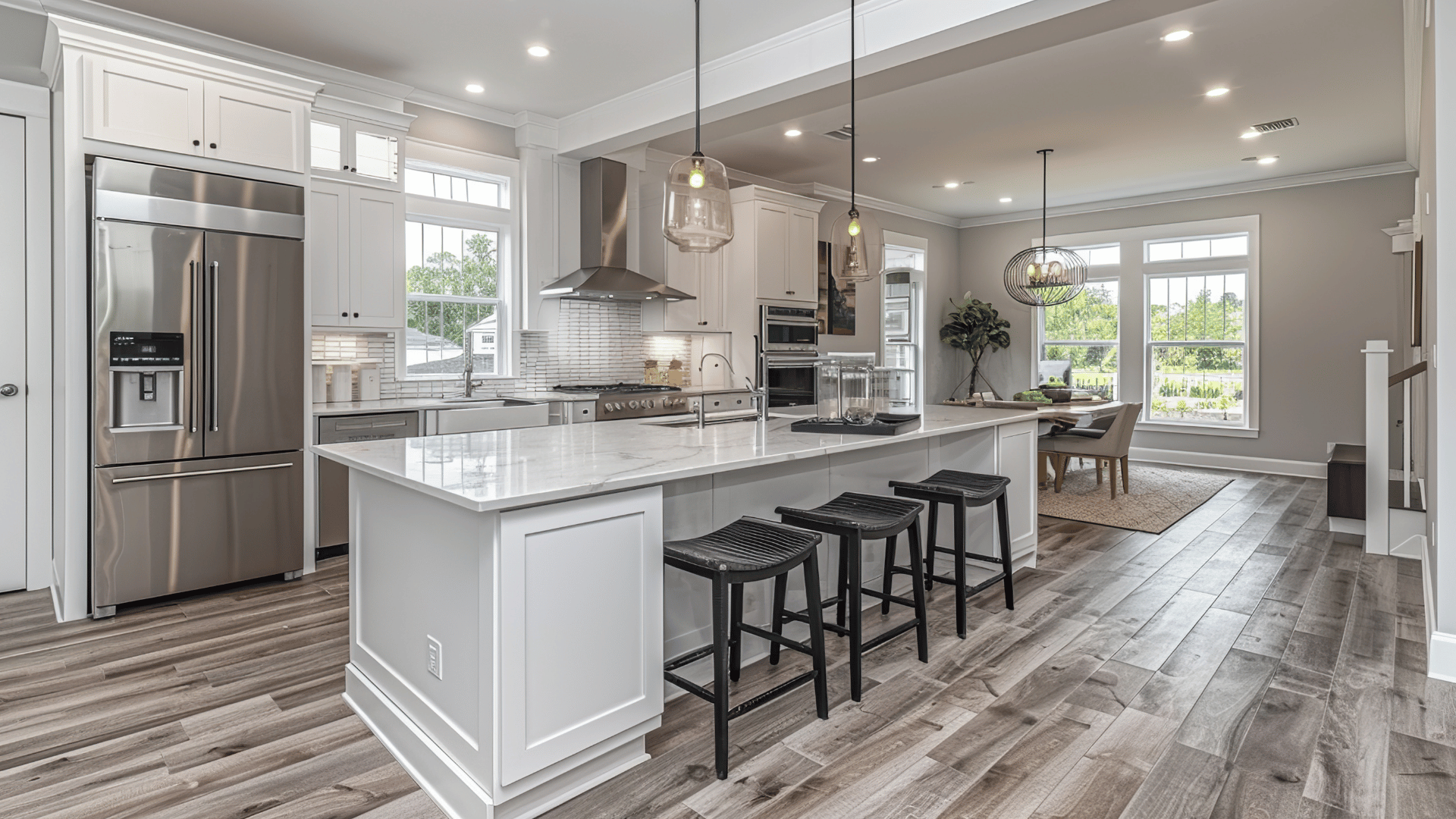
Family kitchens need realistic materials. Morning rushes, kids’ snacks, cooking experiments, and entertaining all take a toll. It is not the right environment for delicate or high-maintenance surfaces.
Wood countertops absorb moisture and stain easily. They can be beautiful in the right context but struggle in truly high-use zones. Marble marks quickly with spills and acids, and frequent sealing is easy to fall behind on. In our experience as a general contractor and renovator, these materials are better suited to secondary spaces or homeowners who genuinely enjoy the upkeep.
In day-to-day family kitchens, quartz and porcelain tend to perform much better. They handle spills, heat, and frequent use with less drama, and they maintain their appearance with basic care. For clients working within a tighter budget, we still see a place for modern laminate. It has come a long way in both look and durability and can be a very practical choice when we are planning kitchen renovations as part of a broader interior remodel or full home renovation.
Bathroom Tile That Handles Humidity
Bathrooms change the rules. Steam, splashes, and regular cleaning mean tile is constantly exposed to moisture. In that environment, your tile needs to tolerate water without constant worry.
Ceramic and porcelain tile have become our go-to choices for most bathroom renovations because they handle humidity very well. They do not require the same level of vigilance that natural stone does, and they help keep long-term bathroom renovation cost under control by avoiding premature failure or intensive maintenance.
When clients ask about using stone in showers or on bathroom floors, we talk honestly about what that will mean five or ten years down the road. For some, it still makes sense. For many, once they understand the trade-offs, they prefer a porcelain that delivers the same style with far less ongoing effort. In our renovation services, this kind of practical guidance is key to a successful renovation that still feels good years later.
Using The Same Materials In Kitchens And Bathrooms
A question we hear often is whether it makes sense to use the same material in both the kitchen and the bathrooms. From a functional standpoint, if the material is suitable for both environments, there is no problem with repeating it.
In fact, using the same quartz chosen for a kitchen renovation in bathroom vanities can create a strong sense of continuity throughout the home. It can also make financial sense. Because quartz is purchased in slabs, we can often use the remaining portions of a slab from the kitchen to fabricate bathroom countertops. That reduces waste and helps control renovation costs.
We look at the overall interior design of the home, how much variety you want from room to room, and where repeating materials supports the look you are after. When it is done thoughtfully, using the same material across spaces is a design choice with real practical benefits, whether we are working in the kitchen, bathroom, basement, or living room.
Why Early Material Planning Matters
The Risk Of Choosing During Construction
Material selections made during construction tend to be born out of pressure. The schedule is moving, trades are waiting, and pricing can shift as options come in and out of stock. In that environment, homeowners often rush decisions or settle for what is readily available instead of what is truly right.
This is where many regrets start. It is not that someone lacks taste or good judgment. It is that the timing and context of the decision did not give them room to think clearly. When you are juggling structural changes, permits, and coordination between trades, trying to choose a countertop pattern in a hurry is not ideal. Even something as simple as painting can feel stressful when you are making choices late in the game rather than as part of a planned renovation project with a clear building permit and scope.
How Our Preconstruction Playbook Protects Your Choices
At The Built Group, we have built our entire approach as a renovation company around avoiding that situation. We operate as a general contractor that relies on a structured preconstruction process. Before any work begins on site, we use what we call our playbook to finalize design and material selections for the project, whether we are renovating a kitchen, bathroom, basement, living room, or an entire home.
In this phase, you work closely with our team. We talk through how you live, what kind of maintenance you are comfortable with, and what you want the space to feel like five or ten years from now. Then we walk you through options, explain the pros and cons, and make clear recommendations based on performance, cost, and long-term outcomes. If we believe a material carries real risk for your household, we say so directly and offer alternatives that keep the spirit of your vision without the drawbacks.
Because the playbook is detailed, our pricing is based on real selections, not guesses. That keeps home renovation costs more predictable and reduces the chance of surprises later. It also lets us order materials early, store them, and move through the build phase more efficiently. You are not making major decisions under pressure, and our crews are not waiting on tile or countertops that have not been chosen yet.
When everything is planned this way, the renovation feels controlled instead of reactive. The finished spaces reflect not only your style but also the realities of your daily life. That combination of good design, thoughtful material choices, and a disciplined renovation process is what allows a renovation to feel right for years, protect resale value, and showcase the kind of craftsmanship you expect from an experienced, reliable contractor.