How to Choose Eco-Friendly Renovation Materials That Save Energy and Last
Eco-Friendly Materials for Sustainable Renovations: Choices That Save Energy and Last
When clients ask us about eco-friendly materials — whether for a custom home build or a major renovation — the conversation starts the same way. They want to make good choices. They're just not sure what good looks like in practice.
"Eco-friendly" gets applied to a wide range of products, and not all of them deliver. Some materials are responsibly sourced but perform poorly in a Toronto climate. Some carry a green label but off-gas for months. And some of the most durable, low-waste choices carry no certification at all.
What Eco-Friendly Means in a Renovation Context
A material earns the label through at least one of three things: how it's sourced, how long it lasts, or what it does to the air inside your home.
Responsibly sourced means raw materials were extracted without permanently depleting the resource. FSC-certified wood, reclaimed materials, and recycled-content products all qualify.
Long-lasting means the material won't need replacing in five or ten years. A porcelain tile floor that holds up for forty years has far less environmental impact than one pulled out and sent to landfill after a decade. Durability is a sustainability argument, not just a quality one.
Better for indoor air means the material doesn't release harmful compounds after installation. Low-VOC paints, formaldehyde-free adhesives, and FloorScore-certified flooring all reduce what your family breathes day to day.
Where Eco-Friendly Upgrades Make the Biggest Difference
Start with insulation and work outward. Most heat loss in a home occurs through the building envelope, not just the windows. Getting this right during a major construction project — especially a complex project in an older GTA home — pays off every winter for the life of the building.
Insulation. Mineral wool (rock wool) resists moisture, fire, and pests, and outperforms fibreglass on acoustic performance. Closed-cell spray foam creates an airtight barrier, adds wall rigidity, and stops drafts. It requires real technical expertise to install correctly, but for air sealing it is one of the most effective products available.
Windows. Triple-pane windows reduce heat transfer far better than older double-pane units. ENERGY STAR-certified windows are performance-tested against standards that put safety first, backed by Natural Resources Canada. In the Canadian construction industry, ENERGY STAR and EnerGuide are among the most recognized benchmarks in North America for residential energy performance.
Flooring Worth Choosing
FSC-certified hardwood comes from responsibly managed forests and lasts for generations when installed with quality craftsmanship. Reclaimed wood is even more sustainable — already dried, dimensionally stable, and one of a kind.
Cork is naturally renewable and performs well acoustically. It is a practical choice for home offices and family rooms.
We recommend bamboo with caution. Quality varies widely. The best products use strand-woven construction with no added formaldehyde. Lower-end bamboo can off-gas and performs poorly in humid environments. Ask for FloorScore or a similar indoor air quality certification before you commit.
Finishes and Surfaces That Hold Up
Low-VOC and zero-VOC paints perform the same as conventional products. We specify them on every project — there is no trade-off.
Porcelain tile resists moisture, staining, and heavy use. A well-installed porcelain floor or wall surface can last decades. It is one of the few materials that genuinely earns both the durability and sustainability label.
Innovation in engineered stone manufacturing means today's countertops use less raw quartz than a solid slab while maintaining tight quality controls. Recycled glass countertops use post-consumer glass in a resin base. Both are hard-wearing and low-maintenance.
Certifications Worth Knowing
FSC on wood products confirms responsible forest management. Look for it on lumber, flooring, and cabinetry. ENERGY STAR on windows and appliances confirms the product is tested against government-backed performance standards backed by Natural Resources Canada. EnerGuide is Canada's whole-home energy rating system — an evaluation shows where your home is losing energy and where upgrades will return the most value against your renovation budget. Low-VOC and FloorScore on flooring and finishes confirm the product meets indoor air quality standards, which matters most in the first year after a renovation.
Materials That Look Sustainable but Often Aren't
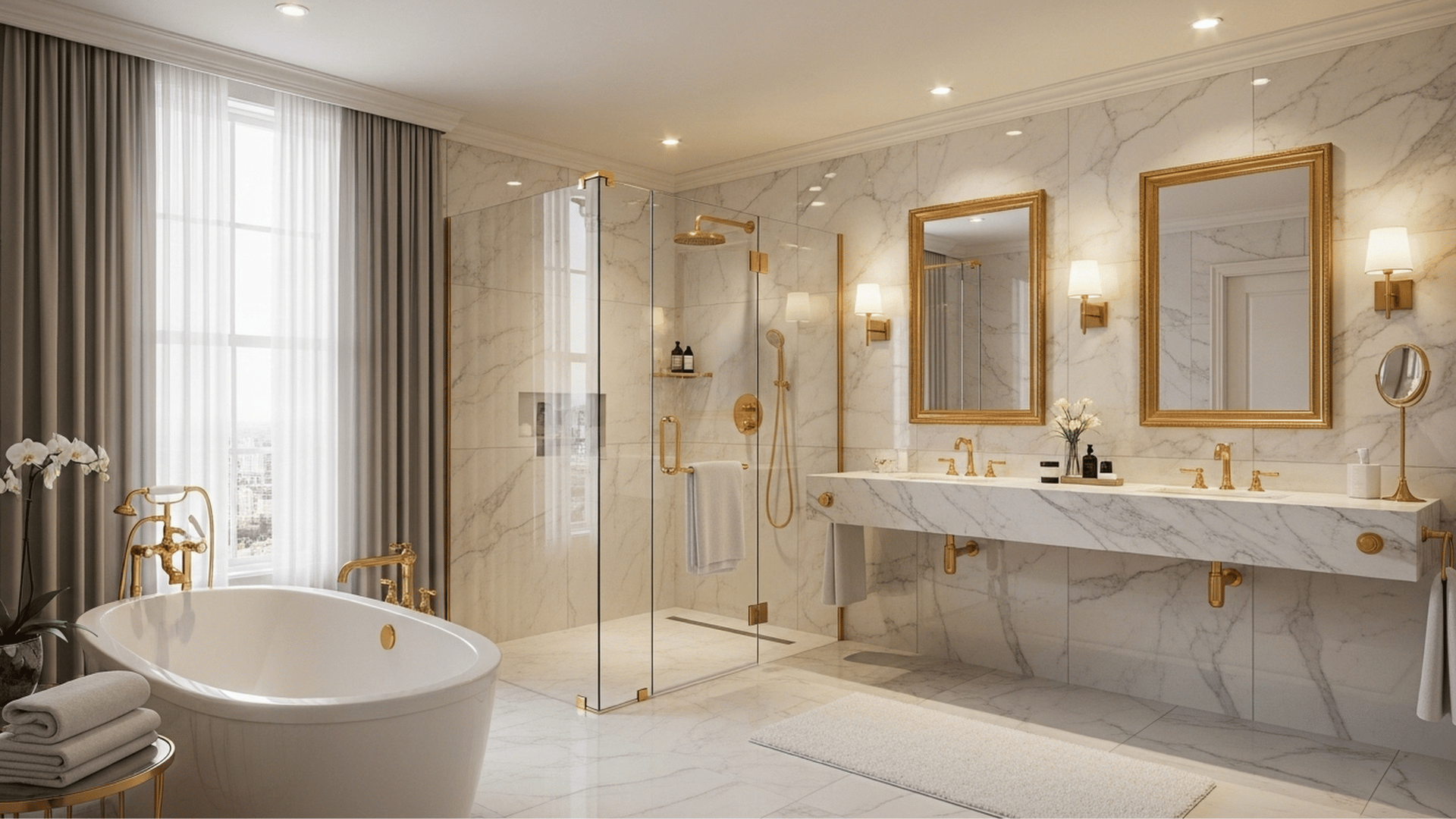
Marble is a natural stone, which sounds environmentally sound. In practice, it stains easily, requires regular sealing, and shows wear faster than most engineered alternatives. A material that demands intensive upkeep or early replacement is not doing the environment any favours.
Some bamboo products use adhesives that off-gas for years. The sustainability of the plant does not automatically transfer to the finished product.
The most useful test: if a material creates significant work or waste over the next twenty years, it is not the sustainable choice.
Installation Is Half the Job
A triple-pane window installed without proper air sealing performs like a far cheaper product. Natural Resources Canada is direct on this: poor installation causes drafts and moisture problems even when the product is rated for high performance. Closed-cell spray foam requires specific temperature and moisture conditions to cure correctly — if those conditions are not met, it fails to form the air barrier it is designed to provide.
Correct installation is skilled, hard work. It takes attention to detail and professionalism, and the difference between a careful installation and a rushed one shows up in energy bills for years. Many contractors underestimate the precision required. Quality workmanship on eco-friendly products is not optional — it is what makes the sustainability claim actually true. In the construction industry, the general contractor you hire is as important a decision as the materials they install.
How We Guide Clients Through These Choices
At The Built Group, a construction company focused on custom home building and major renovations, our construction process is built around one principle: do it right, once. Our general contracting approach means construction management, material selection, and installation sit within one in-house team — no gaps in accountability.
Your dedicated project manager guides you through every material decision during the Construction Playbook process, drawing on real expertise and a project management approach refined across hundreds of residential builds. It is a collaborative process, with your specific needs and project goals on the table before any work begins.
If we believe a material carries real risk — a maintenance burden, an air quality concern, or a performance issue specific to your project — we say so and offer alternatives. Our commitment and integrity do not change once a contract is signed.
A successful project starts with good decisions, made early. The finished project should reflect your family's real needs — built with quality craftsmanship and the standard of excellence your home deserves.
Book a Playbook session and let's walk through it together.