The Smart Way to Renovate: How to Add Technology Before the Walls Close
Smart Home Gadgets to Complement Your Modern Renovation
Most homeowners think about smart home technology too late.
They finish the home renovation, move back in, and then start asking about smart lighting, a programmable thermostat, or a video doorbell. By that point, the walls are closed. The rough-ins are done. Retrofitting anything means opening drywall, adding labour, and spending significantly more than the original upgrade would have cost — an unexpected cost that lands outside the original renovation budget.
The good news is that this is entirely avoidable — as long as the conversation happens before construction begins.
Plan Smart Home Tech Before the Walls Close
There is a narrow window in every home renovation where smart home infrastructure costs almost nothing to include. That window is the rough-in phase — before insulation, before drywall, before finishes. Running an extra conduit, pulling a Cat6 cable, or adding a rough-in box at this stage might add a few hundred dollars to a renovation project. Coming back to do the same work after a renovation is complete can cost several times that — and in older homes, where walls may reveal unexpected structural changes or outdated wiring, retrofit costs can climb further still.
At The Built Group, smart home planning happens during the
Construction Playbook — the structured planning phase that maps every decision before construction begins. Working with a licensed BCIN designer, homeowners think through not just what they need now, but what they may want in three, five, or ten years. Wiring pathways, panel capacity, conduit sleeves, and network infrastructure all get built into the plan. It is the kind of thinking that costs very little during construction and saves a great deal in home renovation costs afterward.
What Smart Home Upgrades Are GTA Homeowners Asking For Most
Smart Lighting Controls
Lighting is consistently one of the first things homeowners bring up. The appeal is practical: control every light in the house from a phone, set schedules, adjust brightness by room, and trigger scenes for different times of day.
The results show up immediately in daily life. Programmable lighting keeps living spaces comfortable and well-lit without anyone needing to think about it. Motion-activated lighting in hallways, stairwells, and entryways adds a layer of safety and convenience that families notice from day one.
Programmable Thermostats and Climate Control
For GTA homeowners, energy costs are a real and recurring concern. Smart thermostats from ecobee or Google Nest learn household routines, adjust automatically, and can be controlled remotely. The savings on heating and cooling bills are measurable year-round — and for larger renovations that add square footage, that cost range becomes even more significant.
But here is something worth understanding: a smart thermostat is only as effective as the building it is installed in. A well-programmed thermostat on a poorly insulated home will reduce waste at the controls. Energy will still escape through the walls, the attic, and around windows and doors. The home renovation itself has to get the envelope right first.
The Built Group treats energy efficiency as a construction decision before it is a technology decision. Insulation, vapour barriers, and proper window and door specifications create the conditions where smart climate systems can actually perform. The thermostat is the final layer — not the foundation.
Smart Security and Entry Systems
Smart locks, video doorbells, and integrated camera systems come up in almost every full home renovation conversation. Families want keyless entry for kids coming home from school. They want to see who is at the door when they are not home. They want remote access for contractors, cleaners, or family members without making extra keys.
These systems work best when they are wired in during construction. A hardwired video doorbell does not depend on battery life. A structured camera system with network drops at planned positions provides better coverage and more reliable performance than a collection of Wi-Fi cameras placed wherever the signal reaches. This is especially true in older homes, where retrofitting through finished walls can mean significant material costs on top of the installation itself.
There is a financial case here too. Monitored security systems are noticed by buyers and often rewarded by insurers. For families with children or aging parents at home, they provide a level of daily reassurance that is hard to put a number on.
Whole-Home Audio and Entertainment
In-wall speaker wiring, ceiling speaker rough-ins, and home theatre conduit are among the upgrades homeowners most often wish they had thought about sooner.
Once drywall is up, clean in-wall runs are no longer possible. Surface conduit becomes the only option — and it shows. For homeowners who want integrated audio or a proper media room setup, the rough-in phase is the only practical opportunity. The wire itself is inexpensive. The labour to add it after the fact is not.
Smart Appliances and Kitchen Integration
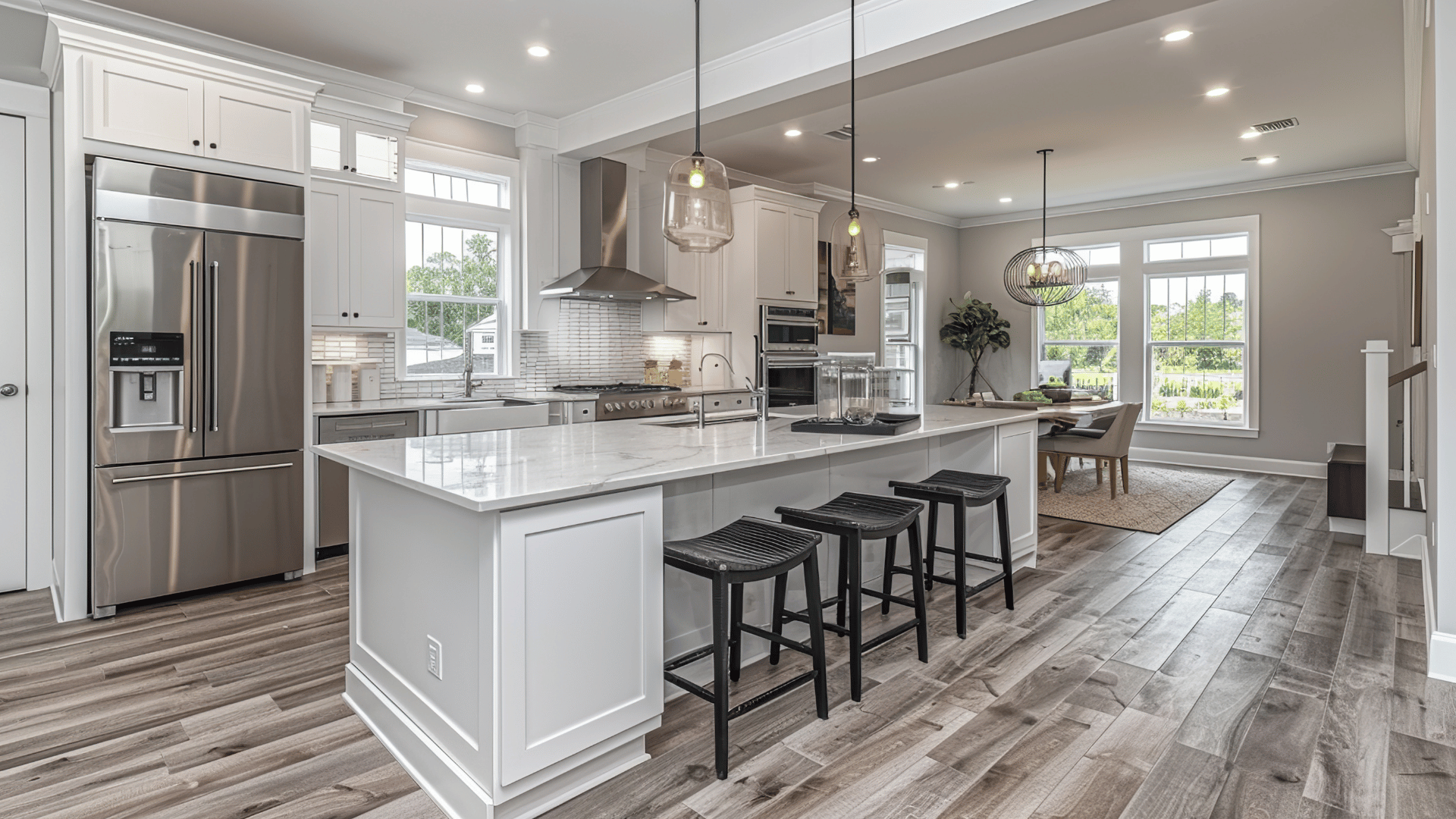
A full kitchen renovation is the right moment to think about what appliances are going in — and what they need to work properly. Modern ranges, refrigerators, and ventilation systems increasingly require dedicated circuits, specific voltage, and sometimes a network connection.
Getting this information during pre-construction means the electrical panel and circuit layout can be designed around it. Skipping this step can mean panel upgrades after the fact, extension work, or discovering mid-project that the planned appliance does not fit the existing electrical rough-in. In a kitchen renovation, those surprises have a way of affecting the home renovation budget in ways that are difficult to recover from without cutting elsewhere.
Infrastructure That Has to Be Decided Before the Walls Close
Technology changes. Infrastructure is much harder to change. These are the decisions that matter most — and getting them right is one of the most effective ways to manage overall renovation costs across a home improvement project.
Electrical Panel Capacity
EV chargers, smart appliances, heated floors, and multi-zone climate systems all draw power. A panel that served a home well through the 1990s may not be built for a fully modernized renovation. This is particularly common in older homes, where the existing panel was never sized for today's electrical loads. Upgrading panel capacity during a renovation is a fraction of the cost of returning to it as a standalone project later — and it may also be required to obtain a building permit for certain significant renovations.
Network and Low-Voltage Wiring
Wireless is convenient. Wired is reliable. Running Cat6 Ethernet to key locations — home office, media areas, security camera positions, mechanical room — during rough-in is inexpensive relative to what it enables. It creates a stable network backbone that every smart home device on that network benefits from. Wi-Fi signals bounce off walls. Ethernet does not.
Conduit Sleeves for Future Use
One of the most practical things a homeowner can do during construction is have empty conduit installed in strategic wall and ceiling cavities — including runs to the basement if future home additions or media infrastructure are on the horizon. It costs very little during a build. It creates pathways for future wiring upgrades that can be pulled through without ever opening a wall. It is the renovation equivalent of building a door before you know what room you will need it for.
How Smart Home Planning Affects House Renovation Cost
The conversation about smart home technology and house renovation cost usually goes one of two ways.
Homeowners who plan for smart infrastructure during pre-construction find that the incremental cost is modest. The work happens alongside everything else. No extra mobilization. No drywall repair. No repainting. The upgrades get absorbed into the natural flow of the renovation project.
Homeowners who decide they want smart home features after the home renovation is complete face a different situation entirely. Every upgrade now requires access to finished spaces. That means cutting, patching, and finishing — three steps that add renovation costs to what should have been a simple installation. Across multiple upgrades, those renovation expenses add up quickly and can push a home renovation budget well past what was originally planned.
The Preconstruction Playbook is built around this reality. It surfaces every decision that is cheaper to make before construction than after. By the time a Built Group renovation project moves into the build phase, homeowners know what is built in, what is roughed in for the future, and what decisions can wait.
Smart Home Investments That Add Long-Term Property Value
Not every smart home upgrade adds resale value. Some are novelty. Some are proprietary systems that the next owner will not want to learn. The ones that consistently hold value are the ones that solve a real problem — regardless of renovation type, whether it is a mid-range renovation, a high-end renovation, or a focused home improvement project on a single floor.
Smart thermostats, integrated security, smart lighting controls, and EV charger infrastructure are currently the upgrades that GTA buyers notice and respond to. EV charger rough-ins in particular are moving from a differentiator to a baseline expectation in recently renovated homes.
Open-platform systems that buyers can step into without a manual hold value better than proprietary setups. A smart home that requires a specialist to explain it is a liability in a sale, not an asset.
The clearest way to think about it: upgrades that reduce a recurring cost, improve daily safety, or add visible convenience add value. Upgrades that exist primarily to impress on a tour generally do not.
Frequently Asked Questions
When is the right time to plan for smart home technology, and how does it affect house renovation costs?
Smart home technology should be planned during the pre-construction phase, before rough-ins are scheduled and walls are closed. When infrastructure is included in the original project scope, the incremental cost is modest. Retrofitting the same work after construction can cost two to three times more — making late decisions one of the more significant unexpected costs a homeowner can face. Conclusion: Planning smart home features before construction begins is the most cost-effective approach and helps avoid higher renovation costs down the road.
Which smart home upgrades make the biggest impact on comfort and energy costs?
Smart thermostats and programmable climate systems consistently deliver the most noticeable day-to-day impact. They learn household routines, reduce energy waste, and maintain comfort without manual adjustment. Smart lighting adds further convenience and helps manage energy use across the home. Conclusion: Climate control and lighting are the smart upgrades that GTA homeowners feel most in their daily routine and on their energy bills.
What infrastructure should homeowners ask for before walls are closed?
Homeowners should consider electrical panel capacity upgrades, Cat6 Ethernet drops to key locations, power rough-ins at entry points for security systems, and empty conduit in walls and ceilings for future wiring flexibility. In older homes, it is also worth having a renovation contractor assess existing wiring before rough-ins begin. Conclusion: A small investment in infrastructure during rough-in creates significant long-term flexibility and helps avoid unexpected expenses later.
How does The Built Group's Construction Playbook help with smart home planning?
The Construction Playbook is a structured pre-construction planning process where homeowners work with a licensed BCIN designer to map out their renovation in full — including wiring, rough-ins, and infrastructure for future technology. This ensures nothing is overlooked before construction begins.
What smart home features tend to add the most resale value?
Smart thermostats, integrated security systems, smart lighting controls, and EV charger rough-ins are among the upgrades that consistently resonate with buyers in the GTA market. Conclusion: Smart home upgrades that solve clear problems — energy, security, comfort — add more resale value than novelty features.
Do insulation and construction quality affect smart home performance?
Yes. A smart thermostat on a poorly insulated home will reduce energy waste at the controls, but heat will still escape through the building envelope. Construction quality creates the foundation that smart technology builds on. Conclusion: Smart home technology performs best when the underlying construction is done right.